Biltong vs. Jerky: What's the Difference and Which Is Actually Healthier?

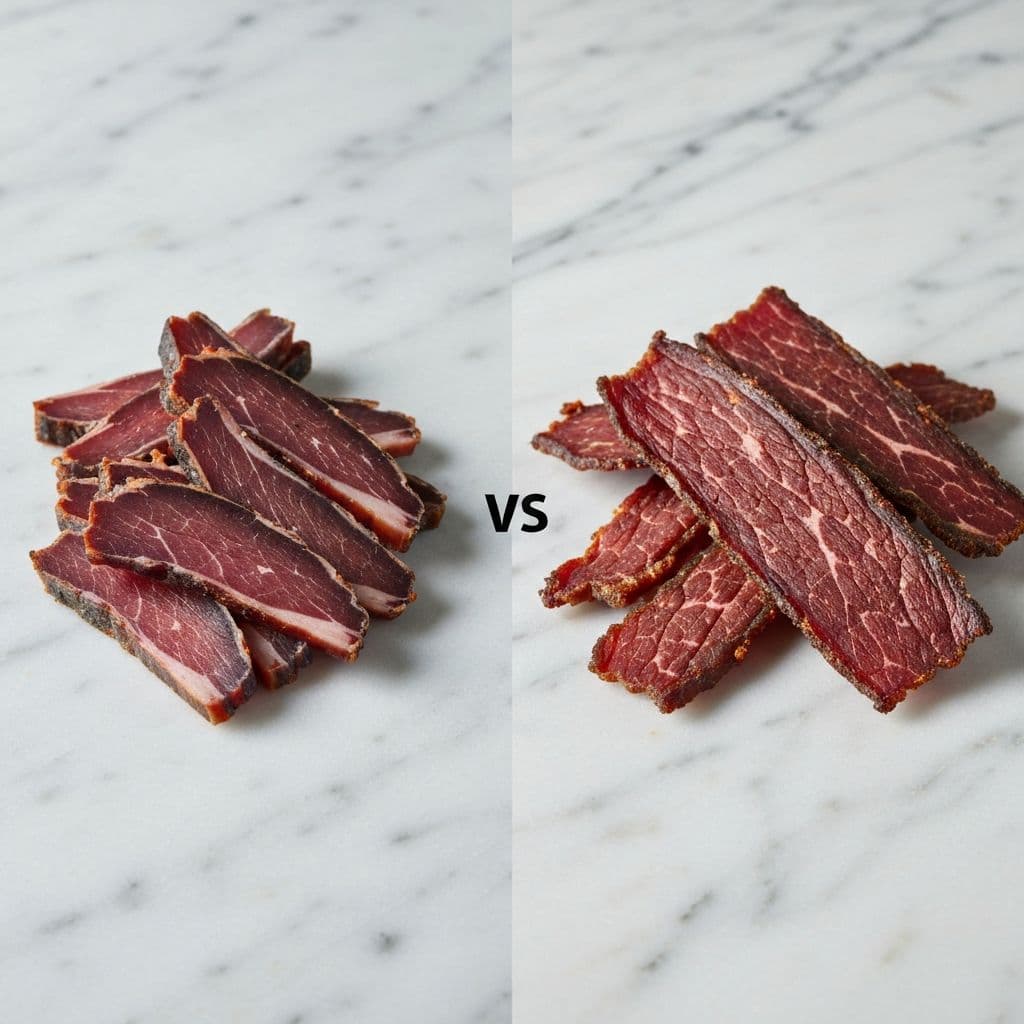
If you've walked down the meat snack aisle recently, you've probably noticed a newcomer muscling in on jerky's territory: biltong. Originally from South Africa, biltong has surged in popularity in the American market, and brands are positioning it as a "healthier alternative" to traditional beef jerky. But is it really?
We dug into the production process, compared nutritional profiles across popular brands, and examined what actually makes these two dried meat products fundamentally different.
How They're Made
The core difference comes down to process. Traditional American beef jerky is made by marinating thin slices of lean beef in a mixture of soy sauce, sugar, and spices, then cooking and dehydrating them at temperatures between 160-175 degrees Fahrenheit. The heat is essential for food safety, but it also allows manufacturers to include higher-sugar marinades since the cooking process concentrates flavors.
Biltong, by contrast, uses a vinegar-based curing process. The meat is typically marinated in vinegar and spices (coriander and black pepper are traditional), then air-dried for several days at room temperature. No heat is applied. The result is a thicker, more tender product with a distinctly different texture and flavor profile.
Nutritional Comparison
On a per-ounce basis, biltong generally wins the macronutrient battle. Because biltong isn't cooked with sugar-heavy marinades, it tends to have significantly less sugar, often zero grams per serving. Protein content is comparable or slightly higher in biltong, averaging 14-16 grams per ounce compared to jerky's 10-13 grams.
Sodium is where it gets interesting. While individual brands vary widely, biltong products tend to have lower sodium than their jerky counterparts, largely because they rely on vinegar and spice for preservation rather than soy sauce and salt.
The Ingredient Factor
This is where biltong really shines. A typical biltong ingredient list reads: beef, vinegar, salt, coriander, black pepper. That's it. Compare that to many popular jerky brands whose ingredient lists stretch 15-20 items deep, including multiple forms of sugar, soy derivatives, and preservatives.
The Verdict
If ingredient transparency and lower sugar content are priorities for you, biltong has a clear edge. But quality varies by brand in both categories. The best beef jerky brands can compete with biltong on nutrition, and the worst biltong brands can be just as processed as mainstream jerky. As always, the label tells the real story.